
Frequently Asked Questions
Gentle guidance for parents considering play therapy for their child.
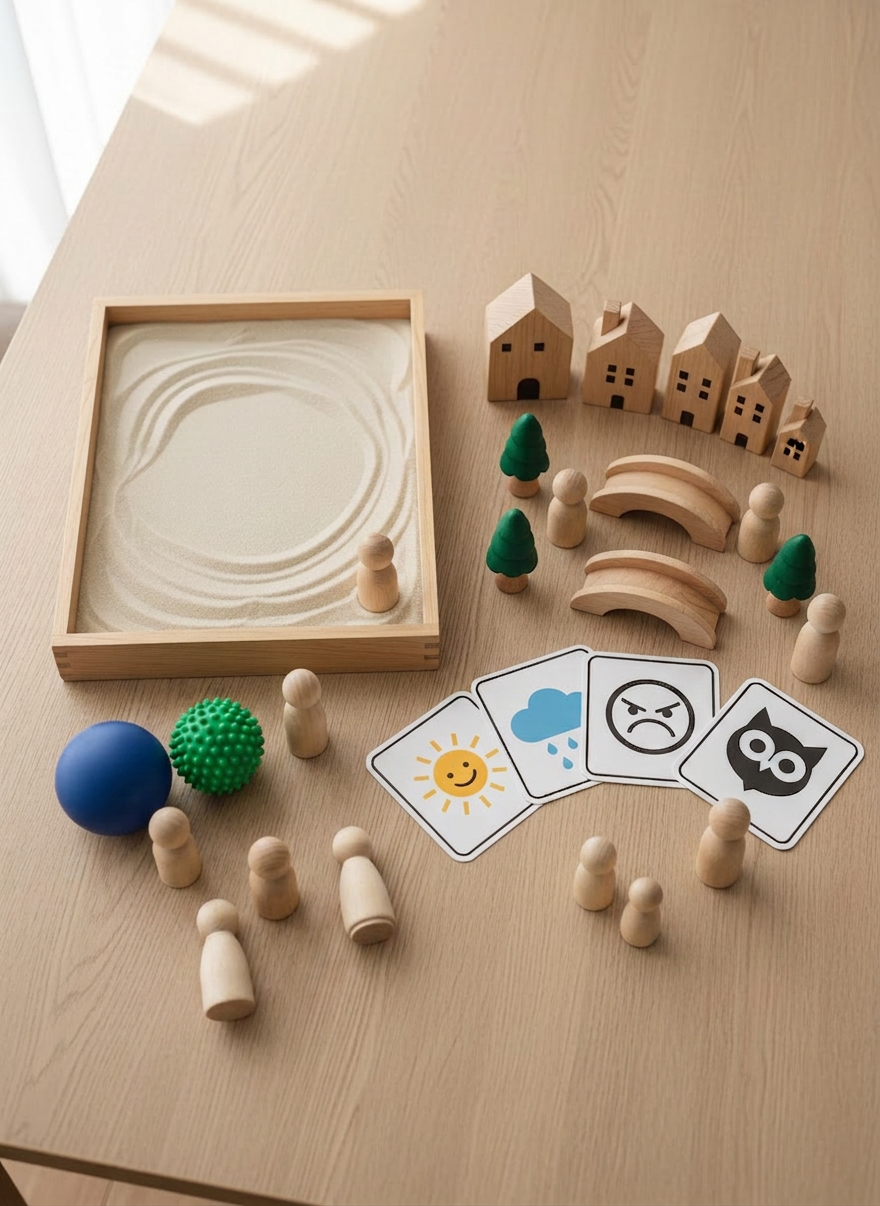
Your Questions About Play Therapy
Find clear answers about referrals, sessions, confidentiality and outcomes, so you can decide whether play therapy feels right for your child.
What is play therapy
Play therapy is a therapeutic approach that helps children express their thoughts, feelings, and experiences through play rather than words. It is especially helpful for children who find it difficult to talk directly about emotions or difficult experiences.
How does a child get referred for play therapy?
Referrals can come from schools, such as SENCOs or teachers or other health professionals, social care services, or parents and carers, depending on the service. An initial discussion usually takes place to understand the child’s needs and to decide whether play therapy is the right support.
What happens in a typical play therapy session?
Play therapy sessions take place weekly at the same time and in the same place to provide consistency and safety. The child is welcomed into a secure environment where they are free to choose how they use the session through play. The therapist follows the child’s lead rather and sessions last 40 minutes.
Where does play therapy take place?
Play therapy sessions can be arranged in your child’s school (pending agreement) or in a private therapy room. We can discuss the most suitable venue for your child and family.
Do children have to talk in play therapy?
Children do not have to talk in play therapy unless they want to. Communication happens through play, behaviour, creativity and the therapeutic relationship rather than through direct conversation. Most children find it difficult to talk directly about emotions or difficult experiences, and play is their natural medium for communication, exploration, and emotional expression.
Is what my child says or does in therapy confidential?
Play therapy is confidential, meaning that what happens in sessions is not usually shared with parents or school without the child’s permission. Play Therapy works by providing a trusting relationship between the child and their therapist. Play themes may be shared with parents and carers. However, if there are concerns that a child or someone else is at risk of harm, or if the law requires information to be shared. These limits to confidentiality are always explained clearly at the start.
How long does play therapy last
The length of play therapy depends on the child’s individual needs. The minimum is 12 weeks, with a review after 8 weeks. Some children may attend for a short block of sessions, while others may need medium or longer-term support if their difficulties are more complex or ongoing. Progress is reviewed regularly with parents and professionals to ensure the work remains appropriate.
Will I be involved as a parent or carer?
Parents and carers are involved throughout the process, even though sessions are child-led. This usually includes an initial assessment conversation and regular review meetings to discuss progress and shared goals. Any feedback is given in a way that supports the child while still respecting their confidentiality.
What outcomes can play therapy help with?
Progress is often seen through changes in the child’s behaviour at home or school, improved emotional expression, increased calmness or confidence, and feedback from review meetings. Changes may also be reflected in subtle shifts in the child’s play themes over time. Play Therapy is not a quick fix, but instead brings long lasting results.
Is play therapy right for my child?
Play therapy may be helpful if a child struggles to talk about feelings, shows emotional or behavioural difficulties, has experienced change or loss, or needs a safe and supportive space to process experiences. A consultation with a therapist is usually the best way to decide whether it is the right support.
What can I do to support my child during this process?
Providing consistency, patience, and emotional reassurance can help your child feel safe and supported throughout therapy. It is important to avoid pressuring them to talk about sessions and instead offer calm, non-judgemental support while allowing them to progress at their own pace. Please feel free to talk to your child’s therapist for further advice. If parents or carers have concerns or would like to discuss sensitive information, this is best done through a telephone call or arranged meeting rather than in front of the child.
Why is parental commitment important in play therapy?
Consistency and commitment are important parts of the therapeutic process, as trust and emotional safety take time to develop. Play therapy takes time, and it’s best to see it as a gentle, gradual process that supports meaningful and lasting change for your child. It is also important that therapy is not ended suddenly without preparation, as this can feel confusing or unsettling for a child and may impact the progress made.
Website Links
-
For more information about play therapy please have a look at the following websites:
 Harbour Therapy